
Sacroiliac Joint Dysfunction and Buttock Pain
This guide covers sacroiliac joint dysfunction and why pain in the buttock or leg needs careful sorting before an appointment.
Where this condition sits
Today it is estimated, according to Spine-health, that the sacroiliac joint is responsible for 15% to 30% of lower back pain cases. That places it inside the low back questions, next to degenerative disc disease and facet joint pain. For a wider view of back pain, read the page on back pain causes, treatment and pain relief.
The first question: joint or nerve
Spine-health also notes that leg pain from sacroiliac joint dysfunction can be particularly difficult to differentiate from radiating leg pain caused by a lumbar disc herniation (sciatica) as they can feel quite similar. That overlap is why the guide on what a lumbar herniated disc does to the nerves is worth reading beside this one. The MSD Manual Consumer Version page on low back pain sets out the wider picture in the same plain terms.
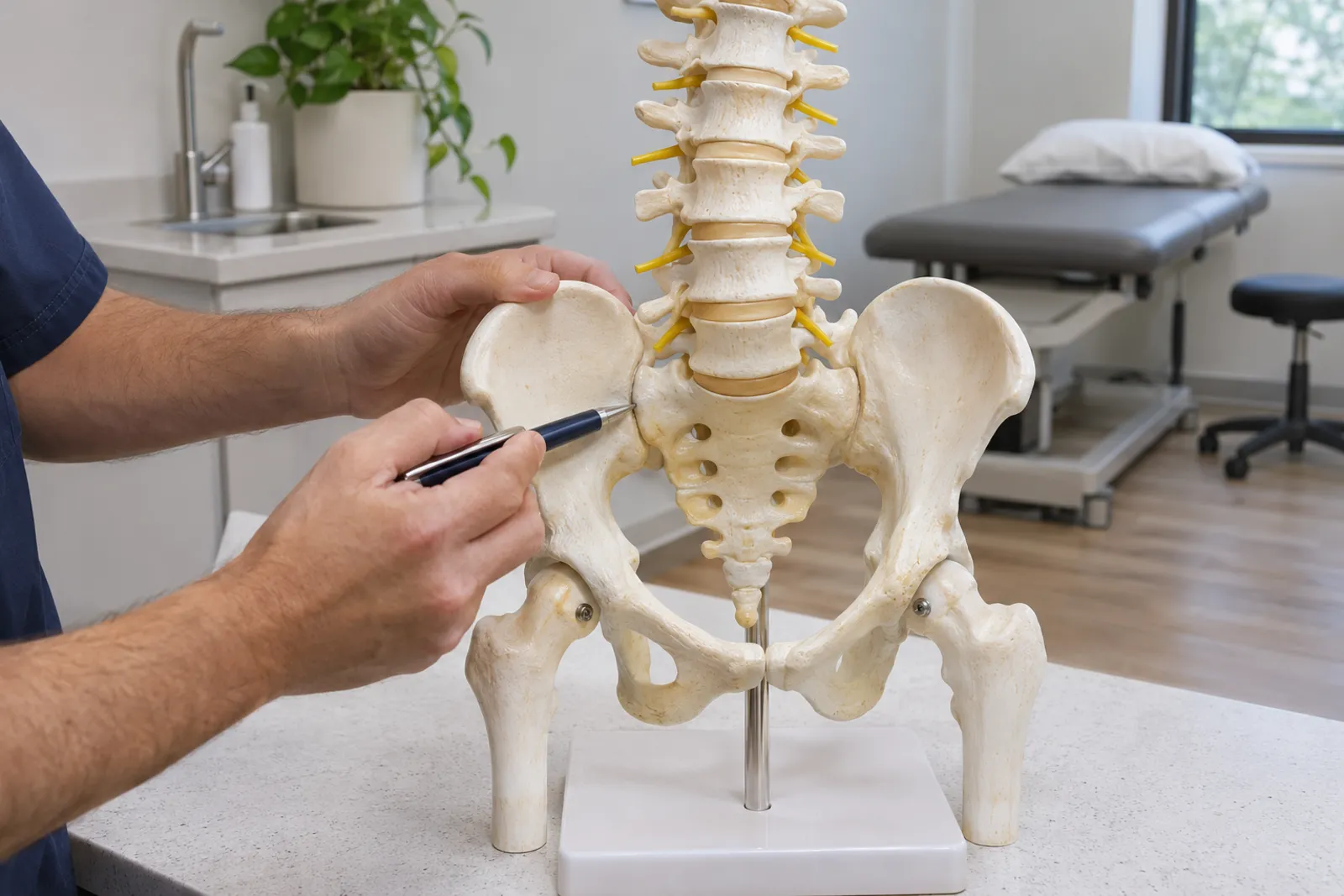
Mapping buttock, back and leg pain
Note whether the pain sits in the buttock, the back or the leg, and whether it changes with walking or sitting. Write down when it began. OrthoInfo's page on low back pain makes a handy reference to keep open while you write.
Take that map of the pain along when you see a clinician in Aurora.